
PROJECT PLANNING & SCHEDULING IN PRACTICE
Project Planning & Scheduling Templates
Practical Tools for Building, Reviewing & Managing Project Plans and Schedules
Effective project planning and scheduling require more than creating activities and assigning dates. Projects need clear planning structures, defined work, logical relationships, realistic constraints, reliable schedule information, and controlled changes. Our practical Project Planning and Scheduling Templates provide structured starting points adaptable to different projects, industries, delivery methods, and scheduling environments. Whether developing a plan, building a schedule, reviewing quality, or managing changes, these resources help strengthen planning practices and project control.
Browse by Resource Type
Explore Practical Project Planning & Scheduling Templates
Choose a practical template or checklist to support important planning and scheduling activities, from developing project plans and structuring project work to identifying constraints, reviewing schedules, establishing schedule basis, and managing baseline changes.
WHY THESE TEMPLATES MATTER
Built for the Realities of Project Planning & Scheduling
Project planning and scheduling require clear structure, reliable information, careful review, and consistent control. Teams may need to develop plans, structure work, identify constraints, establish assumptions, review schedule quality, or manage baseline changes.
Starting from a blank page can take time, while generic templates may lack the structure needed for effective planning and scheduling.
Our Project Planning & Scheduling Templates provide practical frameworks for common activities, helping teams organize information, review key considerations, document decisions, and maintain clear project records.
Whether developing a plan, preparing a schedule, reviewing quality, or supporting project controls, the templates can be adapted to different projects, industries, organizations, and scheduling environments.
Start with a Practical Framework
Begin with a structured starting point instead of creating planning and scheduling documents from scratch. Each resource provides relevant areas to organize information and guide the activity.
Adapt to Your Project
Adjust fields, terminology, review criteria, and level of detail to suit your project requirements, industry, organization, delivery method, and scheduling practices.
Apply to Real Planning Situations
Use the templates during project planning, schedule development, constraint reviews, schedule validation, baseline reviews, change discussions, and other planning and scheduling activities.
Strengthen Planning & Control
Use the information captured to identify planning gaps, review schedule conditions, document changes, assign responsibilities, and support effective project planning and control.
HOW THE TEMPLATES ARE DESIGNED
Structured for Project Planning & Scheduling
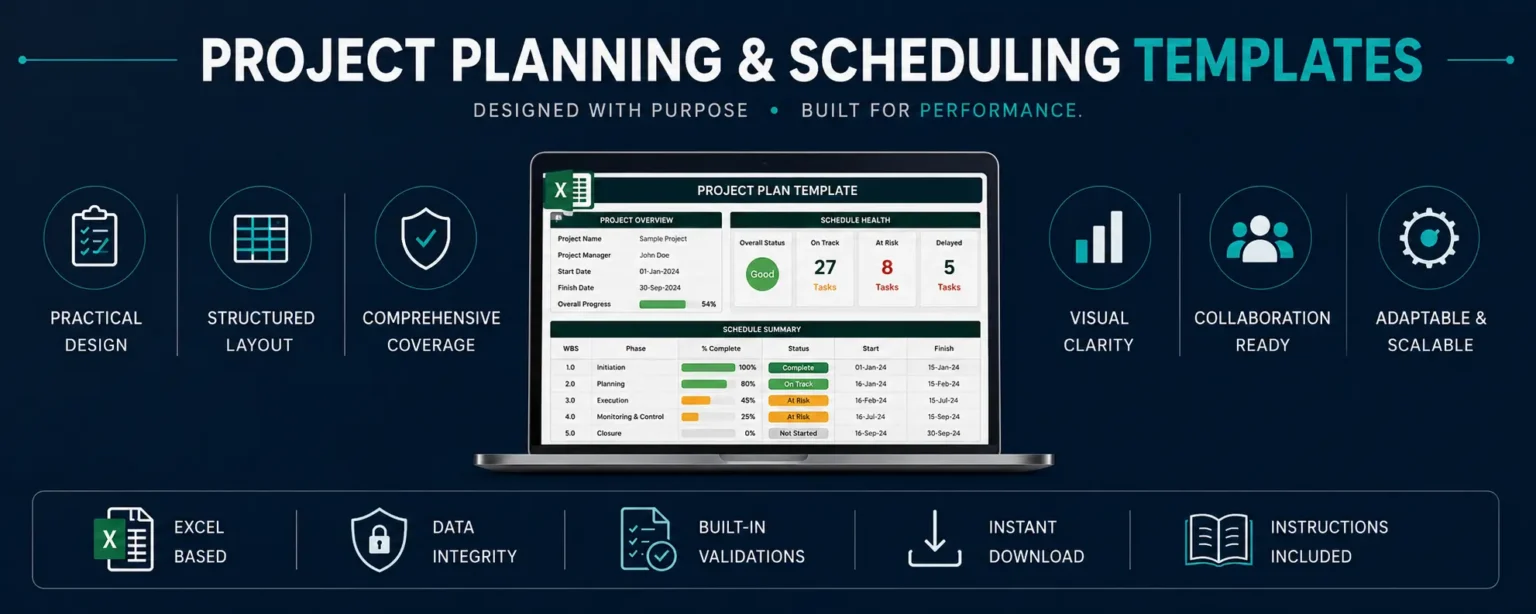
Effective project planning and scheduling templates should provide enough structure to guide the work while remaining flexible enough for different project environments. Our templates are designed around the practical workflows, information, reviews, decisions, and controls involved in each planning and scheduling activity.
Rather than applying one format to every situation, each template is structured according to its specific purpose. This helps users organize planning information, review important considerations, document decisions, and support consistent project planning and schedule control.
Capture Planning Information
Focus on relevant planning and scheduling information, helping users organize key details, assumptions, constraints, milestones, responsibilities, and decisions without unnecessary documentation.
Follow a Logical Workflow
Arrange information in a practical sequence so users can move from planning and work definition through schedule development, review, assessment, and control with greater clarity and consistency.
Keep It Adaptable
Provide flexible frameworks that can be adjusted for different project sizes, industries, delivery methods, scheduling practices, organizational processes, and levels of planning detail.
Support Planning & Control
Structure information to help teams identify gaps, review schedule conditions, manage changes, document decisions, and support effective planning, scheduling, and project control.
HOW TO USE THE TEMPLATES
Support Throughout Project Planning & Scheduling
Project planning and scheduling templates can support different stages of developing, reviewing, and controlling project plans and schedules. They can help organize planning information, structure project work, identify constraints, review schedule quality, and document important planning decisions and changes.
You do not need to use every section of a template for every project. Start with the areas relevant to your planning activity, adapt the structure where necessary, and use each template as a practical working tool that supports your project’s planning and scheduling requirements.
Develop the Project Plan
Use relevant templates to organize project objectives, scope, deliverables, assumptions, constraints, responsibilities, execution considerations, and other information needed to establish a practical project planning foundation.
Structure the Project Work
Use planning and WBS resources to break project scope into manageable components, establish logical work packages, and create a foundation for estimating, scheduling, assigning responsibility, and project control.
Develop & Review the Schedule
Use scheduling templates to organize activities, relationships, milestones, calendars, assumptions, constraints, and other schedule information, then review the schedule for completeness, logic, consistency, and quality.
Control Planning & Schedule Changes
Use the templates to document planning decisions, schedule changes, baseline revisions, review findings, responsibilities, and follow-up actions, supporting consistent planning and effective project control.
FEATURED PROJECT PLANNING & SCHEDULING TEMPLATES
Templates for Common Planning & Scheduling Activities
Our featured templates provide practical starting points for common planning and scheduling activities. Each resource helps structure planning information, develop schedules, identify constraints, review schedule quality, or manage controlled changes.
Choose the template that matches your current need, then adapt it to your project’s size, complexity, industry, delivery method, and scheduling environment. As the library grows, additional resources will support a wider range of planning and scheduling activities.
Templates Designed for Practical Use
Each template provides a structured starting point for a specific planning or scheduling activity, helping users organize information, assess conditions, document decisions, and support effective planning and schedule control. The structure can be adapted to suit different projects, industries, organizations, and scheduling environments.
Project Plan Development Template
Structure project planning information, including objectives, scope, deliverables, assumptions, constraints, responsibilities, execution requirements, and supporting plans for effective project delivery.
Work Breakdown Structure Template
Break project scope into logical work packages, helping teams organize deliverables, assign responsibilities, support estimating, develop schedules, and create a practical foundation for project control.
Schedule Constraints Identification Checklist
Identify and document schedule constraints, assess their effects on planned dates and sequencing, and highlight conditions requiring review, mitigation, or management attention during project delivery.
Schedule Baseline Change Template
Document proposed schedule baseline changes, including reasons, impacts, justification, approvals, effective dates, and revised information to maintain controlled and traceable schedule records.
Project Schedule Review Checklist
Review schedule quality across activities, logic, relationships, durations, constraints, calendars, milestones, critical paths, and other conditions before relying on schedule information for control.
Project Schedule Basis Template
Document assumptions, methodologies, calendars, constraints, milestones, sequencing principles, exclusions, and other planning considerations that establish a clear basis for the project schedule.
DESIGNED FOR FLEXIBLE USE
Adapt the Framework to Your Planning Environment
Project planning and scheduling requirements vary by project size, complexity, delivery method, industry, contractual requirements, organizational processes, and scheduling practices. A construction project may require different planning information from an EPC project, manufacturing initiative, IT implementation, or business transformation program.
The underlying planning and scheduling principles, however, remain consistent. Projects need clear work structures, logical sequencing, realistic assumptions, defined constraints, reliable schedule information, effective reviews, and controlled changes.
Our templates provide structured starting points for these activities while allowing you to adapt terminology, fields, review criteria, responsibilities, and level of detail to suit your project environment.
Construction & Infrastructure
Adapt planning and scheduling templates for site activities, work packages, milestones, access constraints, procurement, subcontractors, resources, interfaces, and delivery requirements.
Engineering, EPC & Manufacturing
Use the templates to structure engineering deliverables, procurement activities, fabrication, production requirements, interfaces, milestones, resources, commissioning, and schedule considerations.
IT, Technology & Digital Projects
Apply the templates to software delivery, system implementation, testing, integrations, dependencies, resources, releases, deployment activities, and technology delivery milestones.
Business & Professional Services
Use the frameworks for transformation initiatives, consulting engagements, business improvements, organizational changes, internal projects, milestones, dependencies, and resource planning.
GUIDES + TEMPLATES
Learn the Approach. Apply It to Your Project.
Understanding a planning or scheduling activity is the first step. Applying it to a real project requires a practical framework for organizing information, reviewing key considerations, and recording decisions.
Our Project Planning & Scheduling Guides explain the approaches behind common planning and scheduling activities, while the related templates and checklists provide structured frameworks that you can adapt and use in your own projects.
Use the guide to understand the approach, then use the related resource to apply it in practice.
Learn with the Guide
Understand the planning or scheduling activity, explore key considerations, and learn practical approaches for applying it effectively.
How to Develop a Project Plan
Learn how to structure a practical project plan by defining objectives, scope, delivery approaches, responsibilities, assumptions, constraints, and supporting project information.
How to Develop a Work Breakdown Structure
Learn how to break project scope into manageable work packages that provide a practical foundation for estimating, scheduling, assigning responsibility, and project control.
How to Identify Schedule Constraints
Learn how to identify, document, assess, and manage schedule constraints that may influence planned dates, sequencing, milestones, and overall project delivery.
How to Manage Schedule Baseline Changes
Learn how to assess proposed schedule changes, understand their impacts, establish appropriate approvals, and maintain controlled records of approved baseline changes.
How to Review and Validate a Project Schedule
Learn how to review schedule structure, logic, relationships, durations, constraints, calendars, milestones, and other factors that influence schedule quality and reliability.
How to Develop a Project Schedule Basis
Learn how to document the assumptions, methodologies, calendars, constraints, sequencing principles, milestones, and other information supporting the project schedule.
Apply with the Template
Use a structured starting point to organize planning information, perform reviews, document decisions, and apply the approach to your project.
Project Plan Development Template
Structure project planning information, including objectives, scope, delivery approach, responsibilities, assumptions, constraints, governance, resources, and supporting project requirements.
Work Breakdown Structure Template
Structure project scope into manageable components and work packages that support estimating, scheduling, responsibility assignment, reporting, and effective project control.
Schedule Constraints Identification Checklist
Identify and document schedule constraints, assess their potential effects, and record relevant information to support informed planning and scheduling decisions.
Schedule Baseline Change Management Template
Document proposed schedule baseline changes, including reasons, impacts, justification, approvals, effective dates, and resulting baseline information for controlled management.
Project Schedule Review & Validation Checklist
Review schedule completeness, logic, relationships, durations, constraints, calendars, milestones, critical path considerations, and other important schedule-quality factors.
Project Schedule Basis Template
Document schedule assumptions, methodologies, calendars, constraints, sequencing principles, milestones, exclusions, and other information supporting the approved project schedule.
Build Your Project Planning & Scheduling Resource Path
Your planning and scheduling work can lead to deeper learning and professional support. Explore related guides, training programs, and consulting resources to strengthen your planning and scheduling capabilities.
MORE PROJECT PLANNING & SCHEDULING RESOURCE TYPES
Continue Your Project Planning & Scheduling Learning
Project planning and scheduling knowledge becomes more valuable when you can understand the concepts, apply structured approaches, and develop practical skills. Explore the other resources within the Project Planning & Scheduling collection to complement the guidance provided in these guides.
Guides
Learn practical approaches to develop project plans, structure schedules, identify constraints, review schedule quality, and strengthen schedule control practices.
Downloads
Access useful planning and scheduling materials and reference resources to support learning and day-to-day project planning and controls activities.
Career Roadmaps
Follow structured learning paths to develop project planning, scheduling, and project controls knowledge, practical skills, and professional capabilities.
Insights
Explore professional perspectives, practical insights, emerging practices, and deeper discussions relevant to project planning, scheduling, and project controls.
Glossary
Find clear explanations of project planning, scheduling, project controls, schedule management, and related professional terminology.
Case Studies
Explore planning and scheduling situations, decisions, challenges, and outcomes to understand how planning and scheduling practices are applied in real projects.
Looking for more project management resources? Explore the Kleios Technologies Resources Hub to discover our complete collection of guides, templates, downloads, career roadmaps, case studies, glossary resources, and insights.
RELATED KNOWLEDGE DOMAINS
Continue Your Learning Across Related Knowledge Domains
Project Management is closely connected with specialized disciplines that support successful planning, execution, governance, performance measurement, and professional growth. Explore related knowledge domains to expand your expertise, develop complementary skills, and access practical resources across the complete project management ecosystem.
Expand your expertise one domain at a time and build a well-rounded project management skill set.
Why Explore Related Domains?
- Develop cross-functional project management expertise
- Discover specialized knowledge beyond core project management
- Access practical resources across interconnected disciplines
- Build a complete professional learning pathway
- Strengthen career readiness through continuous learning
Each knowledge domain complements your Project Management expertise, helping you build broader capabilities and solve real-world project challenges with greater confidence.
Project Management
Practical project management knowledge, practices, and professional resources.
Project Controls
Performance measurement, forecasting, and project control best practices.
PMO
Governance, portfolio management, and organizational project excellence.
Risk Management
Risk identification, assessment, mitigation, and monitoring resources.
Primavera P6
Professional planning, scheduling, resource management, and reporting.
Microsoft Project
Project scheduling, tracking, reporting, and collaboration resources.
Power BI
Interactive dashboards, reporting, visualization, and project analytics.
PMI Certifications
Certification guidance, exam preparation, and professional development resources.
Frequently Asked Questions
Find answers to common questions about the purpose, structure, adaptability, and practical use of the Project Planning & Scheduling Templates available through Kleios Technologies.
What are the Project Planning & Scheduling Templates from Kleios Technologies?
Our templates provide structured starting points for common planning and scheduling activities. They help users organize planning information, develop schedules, identify constraints, review schedule quality, document decisions, and support schedule control.
Who can use these Project Planning & Scheduling Templates?
They are designed for project managers, planning engineers, schedulers, project controls professionals, engineers, consultants, and project team members involved in planning and scheduling activities.
Are these templates suitable for different industries?
Yes. The templates can be adapted for construction, infrastructure, engineering, EPC, manufacturing, energy, IT, digital, business transformation, and professional services projects.
Can I customize the templates for my project?
Yes. You can adapt fields, terminology, review criteria, responsibilities, assumptions, and the level of detail to suit your project requirements, organizational procedures, and scheduling environment.
Do I need Primavera P6 or Microsoft Project to use these templates?
Not necessarily. The templates can be used independently for planning, documentation, review, and control activities. They can also complement scheduling software such as Primavera P6 or Microsoft Project.
Are the templates useful for beginners?
Yes. The structured format provides a practical starting point for professionals who are learning project planning and scheduling, while experienced professionals can adapt the framework to their established project controls practices.
How are the templates connected to the Project Planning & Scheduling Guides?
The guides explain the practical approach behind each planning or scheduling activity, while the related templates and checklists provide a structured way to apply that approach to a real project.
Continue Your Professional Journey
Ready to move beyond self-learning? Explore our professional training programs or partner with our consultants to achieve better project outcomes.