
PROJECT MANAGEMENT IN PRACTICE
Project Management Insights
Practical Analysis of What Really Happens in Projects
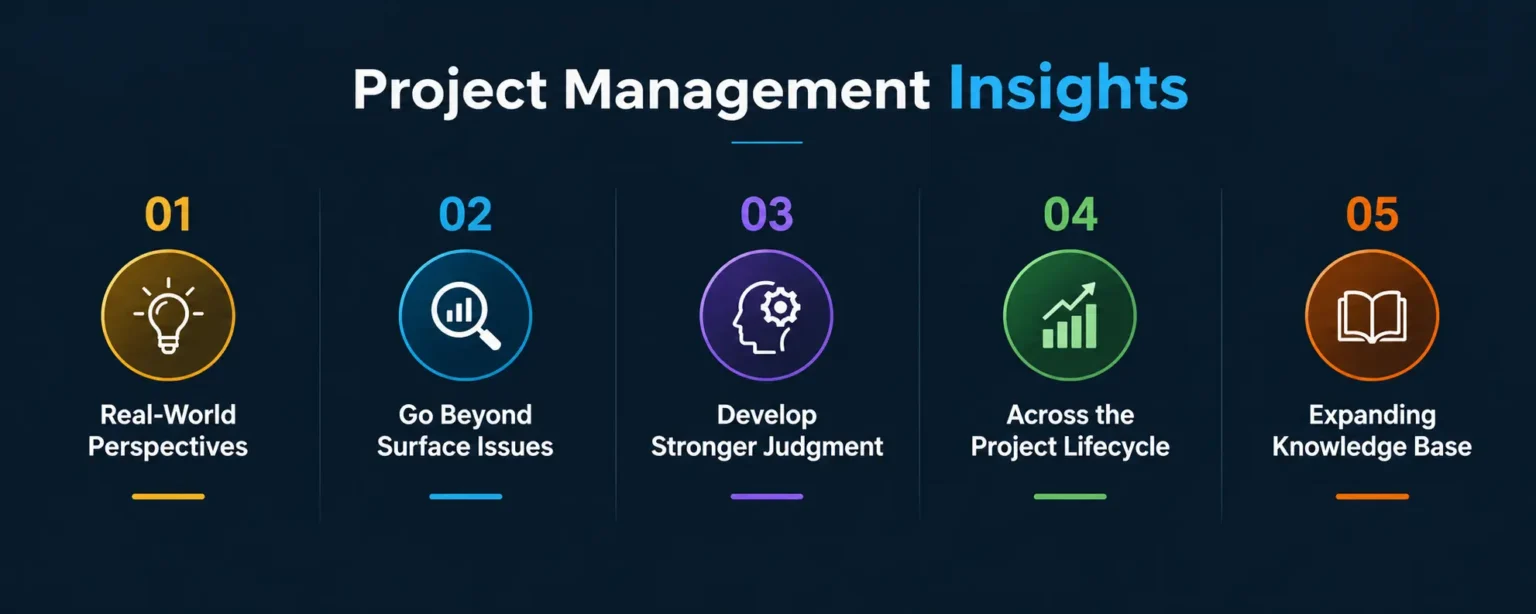
Project Management Insights examine the gap between established project practices and real project outcomes. Instead, we look beyond standard approaches to explore common challenges, hidden causes, decision gaps, and lessons from real project situations. As a result, professionals can question assumptions, recognize patterns, and make better project decisions with greater confidence.
Browse by Resource Type
Explore Practical Project Management Insights
Discover professional perspectives on the challenges that can affect project clarity, alignment, decision-making, performance, and recovery.
WHY THESE INSIGHTS MATTER
Built for the Realities Behind Project Performance
Projects rarely fail for one obvious reason. Instead, problems often develop through unclear objectives, stakeholder tensions, delayed decisions, or overlooked warning signs.
Project Management Insights examine these situations from a professional perspective. Rather than simply explaining established practices, they explore why those practices may fall short in real project conditions.
Therefore, each Insight encourages you to question assumptions, recognize patterns, examine underlying causes, and consider what deserves attention next.
Whether you manage projects, support project controls, lead teams, or advise organizations, these Insights help strengthen professional judgment and decision-making.
Understand What Is Really Happening
Look beyond visible project problems and examine the underlying conditions, patterns, and contributing factors affecting performance.
Question Established Practices
Examine why accepted project-management practices sometimes produce weaker results when teams apply them without considering project realities.
Recognize Patterns Earlier
Identify recurring signals, decision gaps, stakeholder issues, and performance concerns before they develop into larger project problems.
Make Better Project Decisions
Use professional analysis and lessons to evaluate situations, challenge assumptions, and choose more effective responses.
KNOWLEDGE AREAS
Explore Project Management Insights
Explore Project Management Insights across the areas that influence project performance and delivery. Instead of simply describing established practices, these Insights examine challenges, patterns, decisions, and underlying causes.
Project Leadership & Governance
Examine leadership, accountability, governance, and management decisions that shape project direction. Therefore, these Insights help professionals understand how leadership choices influence project outcomes.
Planning & Project Delivery
Explore planning, scheduling, execution, coordination, and delivery challenges that affect project performance. In addition, these Insights examine how project teams respond when delivery conditions change.
Stakeholder & Team Dynamics
Examine stakeholder expectations, communication, collaboration, and team dynamics that influence project outcomes. Furthermore, these Insights explore how relationship challenges can affect project progress.
Risk, Uncertainty & Change
Explore uncertainty, emerging risks, project changes, and disruptions that challenge project teams. As a result, these Insights help professionals examine how teams respond to changing conditions.
Performance & Project Controls
Examine cost, schedule, progress, quality, reporting, and performance signals across projects. Moreover, these Insights explore why reported performance may differ from actual project conditions.
Project Challenges & Recovery
Explore recurring project problems, warning signs, corrective actions, and recovery efforts. Ultimately, these Insights examine why projects struggle and what professionals can learn from those situations.
REAL-WORLD PROJECT CHALLENGES
Explore Insights into the Situations Projects Face
Projects rarely follow a predictable path. Therefore, professionals need to look beyond visible problems and understand the factors that shape project outcomes.
Project Management Insights examine recurring challenges, decision gaps, performance concerns, and management assumptions. Moreover, they encourage professionals to question established practices and consider different perspectives before responding.
Projects Falling Behind
Examine why projects lose momentum, how problems develop, and which factors influence recovery. Furthermore, explore what professionals should consider before choosing corrective actions.
Stakeholder Challenges
Explore how conflicting expectations, communication gaps, and unresolved concerns can affect project outcomes. In addition, examine how stakeholder dynamics can turn manageable issues into wider project problems.
Changing Project Conditions
Examine how changing priorities, scope adjustments, resource constraints, and external factors can alter project outcomes. As a result, these Insights help professionals reconsider assumptions when project conditions shift.
Project Recovery Challenges
Explore why recovery plans can fail despite strong analysis and clear actions. Ultimately, examine the leadership, ownership, execution, and organizational factors that determine whether recovery efforts succeed.
Difficult Project Decisions
Examine why teams delay important decisions and how decision bottlenecks affect project progress. Therefore, consider accountability, escalation, available information, and competing priorities when evaluating decision challenges.
Project Performance Concerns
Explore why project reports and health checks can miss underlying problems. Meanwhile, examine performance signals, emerging patterns, and management assumptions that may hide developing project concerns.
FEATURED PROJECT MANAGEMENT INSIGHTS
Professional Perspectives on the Challenges Projects Face
Managing projects involves more than following established processes and concepts. Instead, professionals must understand why familiar approaches sometimes produce unexpected results.
Our featured Project Management Insights examine recurring challenges, decision gaps, hidden causes, and assumptions that influence project outcomes. Moreover, they encourage professionals to look beyond surface-level problems and consider what may be happening underneath.
Insights Focused on Deeper Project Understanding
Each Insight examines a specific project-management challenge and explores the factors that shape it. Therefore, professionals can question assumptions, recognize patterns, and strengthen their judgment when facing complex project situations.
Why Do Clear Project Objectives Fail?
Explore why clearly stated objectives can still produce weak outcomes when teams interpret priorities, success criteria, or responsibilities differently. Therefore, examine the factors that can weaken alignment despite having documented objectives.
Why Do Stakeholder Management Problems Affect Projects?
Examine how conflicting expectations, communication gaps, and unresolved stakeholder concerns can affect project performance. Furthermore, understand why relationship issues can eventually influence decisions, delivery, and project outcomes.
Why Does Project Decision Making Get Delayed?
Explore why teams delay important project decisions despite having available information. As a result, examine how accountability, competing priorities, escalation, and organizational factors can create decision bottlenecks.
Why Do Project Health Checks Miss Problems?
Examine why project health checks can indicate acceptable performance while deeper concerns continue developing. Instead, look beyond reported status and consider the conditions that influence actual project health.
Why Do Early Project Warning Signs Get Ignored?
Explore the signals and patterns that often appear before significant project problems emerge. Moreover, examine why teams sometimes overlook these indicators and what that reveals about project management practices.
Why Do Project Recovery Plans Fail?
Examine why well-structured recovery plans can struggle during execution. Ultimately, consider how ownership, leadership, resources, stakeholder alignment, and execution discipline influence recovery outcomes.
FROM INSIGHT TO ACTION
Turn Project Observations Into Better Decisions
An Insight should do more than describe a project problem. Instead, it should help professionals examine the situation and decide what deserves attention.
01
Observe the Situation
Identify what is happening and distinguish visible symptoms from underlying issues. Then, examine the surrounding conditions to understand how they may influence project performance and delivery outcomes.
02
Question the Assumptions
Examine existing processes, expectations, decisions, and interpretations that shape the current situation. However, question whether these assumptions contribute to the challenge or restrict the responses available.
03
Interpret the Signals
Connect project information, behaviors, patterns, and outcomes to identify meaningful signals. Furthermore, examine what these signals reveal about underlying conditions, emerging concerns, and potential project impacts.
04
Determine the Response
Evaluate available choices, potential consequences, and stakeholder considerations before selecting an appropriate response. Therefore, choose actions that address the situation while supporting project objectives and delivery.
Insights create the thinking layer between project information and project action.
MORE PROJECT MANAGEMENT RESOURCESE TYPES
Continue Your Project Management Learning
Project management knowledge becomes more valuable when you can apply it, see it in practice, and continue developing your capabilities. Explore our other resources to complement the practical guidance provided in these guides.
Guides
Explore clear guidance to understand common challenges, evaluate situations, and apply effective approaches throughout project delivery.
Downloads
Access useful project management materials and reference resources to support your learning and day-to-day project work.
Career Roadmaps
Follow structured learning paths to develop project management knowledge, practical skills, and capabilities for your professional growth.
Templates
Use practical project management templates to structure planning, management, reporting, and other project activities.
Case Studies
Explore realistic project situations, decisions, challenges, and outcomes to understand how project management practices work in practice.
Glossary
Find clear explanations of project management terminology, concepts, abbreviations, and commonly used professional language.
Looking for more project management resources? Explore the Kleios Technologies Resources Hub to discover our complete collection of guides, templates, downloads, career roadmaps, case studies, glossary resources, and insights.
RELATED KNOWLEDGE DOMAINS
Continue Your Learning Across Related Knowledge Domains
Project management connects with specialized disciplines, tools, and professional practices that support successful project delivery. Explore related knowledge domains to expand your expertise, develop complementary skills, and discover deeper resources beyond the Project Management Guides.
Expand your expertise one domain at a time and build a well-rounded project management skill set.
Why Explore Related Domains?
- Develop cross-functional project management expertise
- Discover specialized knowledge beyond core project management
- Access practical resources across interconnected disciplines
- Build a well-rounded professional learning pathway
- Strengthen your ability to address real-world project challenges
Each knowledge domain complements the practical guidance in our Project Management Guides, helping you build broader capabilities and address real-world project challenges with greater confidence.
Project Planning & Scheduling
Planning techniques, scheduling methods, and timeline management resources.
Project Controls
Performance measurement, forecasting, and project control best practices.
PMO
Governance, portfolio management, and organizational project excellence.
Risk Management
Risk identification, assessment, mitigation, and monitoring resources.
Primavera P6
Professional planning, scheduling, resource management, and reporting.
Microsoft Project
Project scheduling, tracking, reporting, and collaboration resources.
Power BI
Interactive dashboards, reporting, visualization, and project analytics.
PMI Certifications
Certification guidance, exam preparation, and professional development resources.
Frequently Asked Questions
Find answers to common questions about the purpose, approach, and professional value of Project Management Insights available through Kleios Technologies.
What are the Project Management Insights from Kleios Technologies?
Our Project Management Insights examine common project challenges, assumptions, decisions, and performance concerns. Rather than simply explaining established practices, they explore why problems develop and what professionals should consider when responding.
How are these Insights different from general project management articles?
These Insights go beyond general explanations and surface-level observations. Instead, they examine underlying causes, recurring patterns, and gaps between expected and actual project outcomes. This approach encourages deeper thinking and stronger professional judgment.
Who can benefit from Project Management Insights?
Project managers, project controls professionals, team leaders, consultants, and experienced practitioners can benefit from these Insights. Moreover, they help professionals examine complex situations, challenge assumptions, and strengthen decision-making across different project environments.
Are the Insights useful for beginners?
Yes. Beginners can use these Insights to develop a deeper understanding of how projects behave beyond established processes. Furthermore, the analysis can help them recognize common challenges and develop stronger professional thinking as they gain experience.
Do the Insights cover different project management disciplines?
Yes. The collection will expand across leadership, governance, planning, stakeholders, risk, performance, project controls, change, and recovery. Therefore, the Knowledge Areas provide a broader structure for exploring different aspects of project management.
Can I use an Insight when I face a project problem?
Yes. An Insight can help you examine a situation from different perspectives before taking action. However, it does not replace project-specific analysis, professional judgment, or organizational procedures when you address complex project problems.
How can I find the right Project Management Insight for my situation?
Start with the Knowledge Areas or explore the featured collection based on your current challenge. Alternatively, review related Guides and Templates when you need structured guidance or tools to support your next step.
Continue Your Professional Journey
Ready to move beyond self-learning? Explore our professional training programs or partner with our consultants to achieve better project outcomes.