
PROJECT CONTROLS IN PRACTICE
Project Controls Guides
Practical Guidance for Measuring, Monitoring, and Controlling Project Performance
Effective project controls requires more than tracking costs and producing reports. Project controls professionals must establish reliable control processes, measure project progress accurately, analyze cost variances, develop realistic forecasts, monitor cost and schedule performance, and turn project data into meaningful management information. Our practical Project Controls Guides help professionals approach these activities with greater clarity, consistency, and confidence.
Browse by Resource Type
Explore Practical Project Controls Guidance
Find practical guidance for the project controls activities that help teams measure performance, identify problems, understand their causes, forecast outcomes, and take timely corrective action.
WHY THESE GUIDES MATTER
Make Better Project Control Decisions
Effective project controls requires more than collecting project data and preparing reports. Project teams need reliable progress measurement, meaningful performance analysis, realistic forecasts, and timely corrective actions to maintain control over project outcomes.
Our Project Controls Guides focus on these practical aspects of project performance. Instead of simply explaining project controls concepts, they help you understand how to measure progress, analyze variances, develop forecasts, monitor performance, and turn project information into better management decisions.
Whether you are supporting project controls, managing project costs, monitoring progress, or preparing performance reports, these guides are designed to help you work with greater clarity, identify issues earlier, and maintain better control over project performance.
Establish Project Controls
Define control processes, responsibilities, reporting requirements, performance measures, and the information needed to establish a reliable project controls framework.
Measure Project Performance
Establish reliable progress measures, evaluate actual performance, identify deviations, and use consistent information to understand the project’s current position.
Analyze and Forecast Performance
Investigate cost and performance variances, identify underlying causes, develop realistic forecasts, and understand how current trends may affect outcomes.
Support Better Project Decisions
Turn project controls information into meaningful insights, corrective actions, and management decisions that improve visibility and strengthen project performance.
KNOWLEDGE AREAS
Explore Project Controls Guides
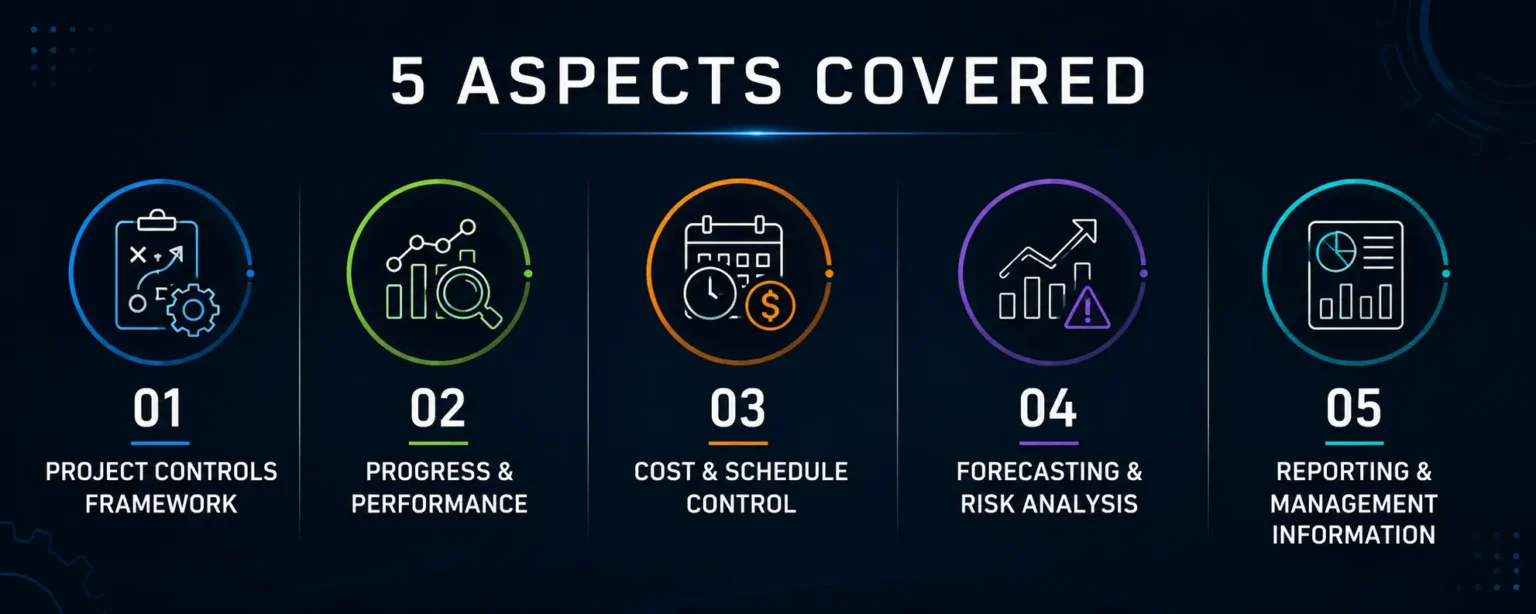
Explore practical guides covering the key areas of project controls. Each guide focuses on the methods, analysis, decisions, and practices that help professionals measure performance, identify issues, develop forecasts, and maintain effective control throughout the project lifecycle.
Project Controls Fundamentals
Practical guidance for establishing project controls processes, responsibilities, reporting requirements, performance measures, and the foundations of effective project performance management.
Progress Measurement & Performance
Guidance for establishing progress measurement methods, validating reported progress, evaluating actual performance, identifying deviations, and maintaining reliable project performance information.
Cost Variance Analysis
Practical guidance for analyzing project cost variances, identifying underlying causes, evaluating financial impacts, investigating trends, and supporting appropriate corrective actions.
Cost Forecasting & Performance
Guidance for developing reliable cost forecasts, evaluating current trends, estimating completion costs, reviewing forecast assumptions, and improving confidence in project outcomes.
Project Controls Reporting
Practical guidance for preparing meaningful project controls reports, presenting performance information, explaining key variances, highlighting risks, and supporting informed management decisions.
Cost & Schedule Monitoring
Practical guidance for monitoring cost and schedule performance, comparing planned and actual results, identifying emerging issues, evaluating trends, and maintaining effective project control.
REAL-WORLD PROJECT CONTROLS CHALLENGES
Find Guidance for the Project Controls Situations You Face
Project controls rarely remain straightforward throughout project delivery. Incomplete data, inaccurate progress, cost variances, changing forecasts, reporting issues, and inconsistent performance information can affect the reliability of project decisions and the ability to maintain control.
Our guides provide practical approaches for understanding these situations, evaluating their impact, identifying underlying causes, and taking appropriate project controls actions.
Setting Up Project Controls
Understand how to establish project controls processes, define responsibilities, structure reporting requirements, and create a practical framework for monitoring project performance.
Measuring Project Progress
Learn how to establish reliable progress measures, validate reported progress, evaluate actual performance, and create consistent information for effective project monitoring and control.
Analyzing Project Cost Variances
Understand how to investigate cost variances, identify underlying causes, assess financial impacts, and determine appropriate corrective actions before problems become more significant.
Forecasting Project Cost Performance
Learn how to develop reliable cost forecasts, evaluate current trends, review forecast assumptions, estimate completion costs, and improve confidence in expected project outcomes.
FEATURED PROJECT CONTROLS GUIDES
Practical Guidance for Measuring, Analyzing, and Controlling Project Performance
Effective project controls requires more than collecting project data and preparing reports. Teams need to measure progress, understand cost and schedule performance, identify variances, investigate their causes, and develop realistic forecasts.
Our featured Project Controls Guides focus on these practical challenges, providing structured approaches that professionals can apply throughout the project lifecycle. From establishing control processes and measuring progress to analyzing variances, developing forecasts, and monitoring performance, each guide helps you understand problems, take appropriate action, and make better project decisions.
Guides Focused on Practical Application
Each guide addresses a specific project controls challenge and provides practical approaches, considerations, and actions that can be applied across different project environments.
How to Set Up Effective Project Controls
Learn how to establish project controls processes, define responsibilities, set performance measures, structure reporting requirements, and create a reliable framework for project performance management.
How to Measure Project Progress Accurately
Learn how to establish reliable progress measurement methods, validate reported progress, evaluate actual performance, identify deviations, and maintain consistent project performance information.
How to Analyze Project Cost Variances
Understand how to identify project cost variances, investigate their underlying causes, assess financial impacts, evaluate trends, and determine appropriate corrective actions.
How to Build Reliable Project Cost Forecasts
Learn how to develop realistic cost forecasts, evaluate current cost trends, review forecast assumptions, estimate completion costs, and improve confidence in projected outcomes.
How to Prepare Effective Project Controls Reports
Understand how to organize project performance information, present key variances, explain underlying issues, highlight emerging risks, and provide management with actionable information.
How to Monitor Project Cost and Schedule
Learn how to compare planned and actual performance, identify emerging cost and schedule issues, evaluate trends, and support timely corrective project actions.
GUIDES + TEMPLATES
Learn the Approach. Apply It to Your Project.
Understanding project controls is the first step. Applying it to a real project requires a practical framework for establishing controls, measuring performance, analyzing information, developing forecasts, and documenting decisions.
Our Project Controls Guides explain practical approaches to common project controls activities, while the related templates provide structured frameworks that you can adapt and use in your own projects.
Use the guide to understand the approach, then use the related template to apply it in practice.
Learn with the Guide
Understand the project controls activity, explore key considerations, and learn practical approaches for applying effective controls throughout the project lifecycle.
How to Set Up Effective Project Controls
Learn how to establish control processes, define responsibilities, set performance measures, structure reporting requirements, and create a reliable project controls framework.
How to Measure Project Progress Accurately
Learn how to establish progress measurement methods, validate reported progress, evaluate actual performance, identify deviations, and maintain reliable performance information.
How to Analyze Project Cost Variances
Learn how to identify cost variances, investigate underlying causes, assess financial impacts, evaluate emerging trends, and determine appropriate corrective actions.
How to Build Reliable Project Cost Forecasts
Learn how to develop realistic cost forecasts, evaluate current trends, review assumptions, estimate completion costs, and improve confidence in projected outcomes.
How to Prepare Effective Project Controls Reports
Learn how to organize performance information, present key variances, explain underlying issues, highlight risks, and provide actionable information for management decisions.
How to Monitor Project Cost and Schedule
Learn how to compare planned and actual performance, identify emerging issues, evaluate trends, and support timely corrective actions throughout project delivery.
Apply with the Template
Use a structured starting point to establish controls, measure performance, analyze variances, develop forecasts, prepare reports, and support project decisions.
Project Controls Setup Template
Establish project controls information, including responsibilities, processes, performance measures, reporting requirements, review cycles, governance, and supporting project control requirements.
Project Progress Measurement Template
Record progress measurement information, including planned quantities, actual quantities, measurement methods, weighted progress, verification status, evidence, and supporting project information.
Project Cost Variance Template
Analyze project cost variances, including planned costs, actual costs, variance values, variance percentages, underlying causes, impacts, corrective actions, and responsible owners.
Project Cost Forecasting Template
Structure project cost forecasts, including actual costs, commitments, estimates to complete, forecast costs, assumptions, trends, risks, and expected completion information.
Project Controls Reporting Template
Structure project performance information, including cost, schedule, progress, variances, forecasts, risks, key issues, corrective actions, decisions, and management recommendations.
Cost & Schedule Performance Template
Compare planned and actual cost and schedule performance, identify emerging variances, evaluate trends, document impacts, and support timely corrective project actions.
Build Your Project Controls Resource Path
Your project controls work can lead to deeper learning and professional development. Explore related guides, templates, training programs, and consulting resources to strengthen your project controls capabilities.
MORE PROJECT CONTROLS RESOURCE TYPES
Continue Your Project Controls Learning
Project controls knowledge becomes more valuable when you can understand performance, apply structured methods, and develop practical skills. Explore the other resources within the Project Controls collection to complement the guidance provided in these guides.
Templates
Use practical templates and checklists to establish controls, measure progress, analyze variances, develop forecasts, prepare reports, and support project performance management.
Downloads
Access useful project controls materials and reference resources to support learning and day-to-day activities involving cost, progress, forecasting, reporting, and project performance.
Career Roadmaps
Follow structured learning paths to develop project controls knowledge, practical skills, analytical capabilities, and professional competencies for project controls career development.
Case Studies
Explore project controls situations, decisions, challenges, and outcomes to understand how cost, progress, forecasting, reporting, and performance practices are applied in real projects.
Glossary
Find clear explanations of project controls, cost control, progress measurement, forecasting, performance management, reporting, and related terminology used across project environments.
Insights & Articles
Explore professional perspectives, insights, emerging practices, and discussions relevant to project controls, cost management, performance measurement, forecasting, and reporting.
Looking for more project management resources? Explore the Kleios Technologies Resources Hub to discover our complete collection of guides, templates, downloads, career roadmaps, case studies, glossary resources, and insights.
RELATED KNOWLEDGE DOMAINS
Continue Your Learning Across Related Knowledge Domains
Project Management is closely connected with specialized disciplines that support successful planning, execution, governance, performance measurement, and professional growth. Explore related knowledge domains to expand your expertise, develop complementary skills, and access practical resources across the complete project management ecosystem.
Expand your expertise one domain at a time and build a well-rounded project management skill set.
Why Explore Related Domains?
- Develop cross-functional project management expertise
- Discover specialized knowledge beyond core project management
- Access practical resources across interconnected disciplines
- Build a complete professional learning pathway
- Strengthen career readiness through continuous learning
Each knowledge domain complements your Project Management expertise, helping you build broader capabilities and solve real-world project challenges with greater confidence.
Project Management
Practical project management knowledge, practices, and professional resources.
Project Planning & Scheduling
Planning techniques, scheduling methods, and timeline management resources.
PMO
Governance, portfolio management, and organizational project excellence.
Risk Management
Risk identification, assessment, mitigation, and monitoring resources.
Primavera P6
Professional planning, scheduling, resource management, and reporting.
Microsoft Project
Project scheduling, tracking, reporting, and collaboration resources.
Power BI
Interactive dashboards, reporting, visualization, and project analytics.
PMI Certifications
Certification guidance, exam preparation, and professional development resources.
Frequently Asked Questions
Find answers to common questions about the purpose, approach, and practical use of the Project Controls Guides available through Kleios Technologies
What are the Project Controls Guides from Kleios Technologies?
Our guides provide practical guidance on establishing project controls, measuring project progress, analyzing cost variances, developing cost forecasts, preparing project controls reports, monitoring cost and schedule performance, and addressing common project controls challenges.
How are these guides different from general project controls articles?
These guides focus on solving practical project controls problems rather than simply explaining concepts. Each guide provides a structured approach, practical considerations, examples, common mistakes, and actions that can be applied to real project situations.
Who can use the Project Controls Guides?
The guides are useful for project controls professionals, cost engineers, planning engineers, project managers, project engineers, construction professionals, project coordinators, and professionals developing their project controls knowledge.
Are the guides useful for beginners?
Yes. The guides are written in a practical and structured way so that beginners can understand the fundamentals while experienced professionals can use the approaches to review and improve their existing project controls practices.
Do the guides cover different areas of project controls?
Yes. The collection covers key areas including project controls setup, progress measurement, cost variance analysis, cost forecasting, project controls reporting, and cost and schedule performance monitoring.
Can I use the guides when I face a project controls problem?
Yes. The guides are designed around practical project situations. You can use them to understand the problem, identify possible causes, evaluate its impact, determine appropriate actions, and apply a structured approach to resolving it.
How can I find the right Project Controls Guide for my situation?
Start by identifying the type of challenge you are facing. If you need to establish a controls framework, start with the project controls setup guide. For progress issues, use the progress measurement guide. For cost concerns, explore the variance or forecasting guides. For management communication, use the project controls reporting guide.
Continue Your Professional Journey
Ready to move beyond self-learning? Explore our professional training programs or partner with our consultants to achieve better project outcomes.