
PROJECT MANAGEMENT TEMPLATE
Project Stakeholder Management Template
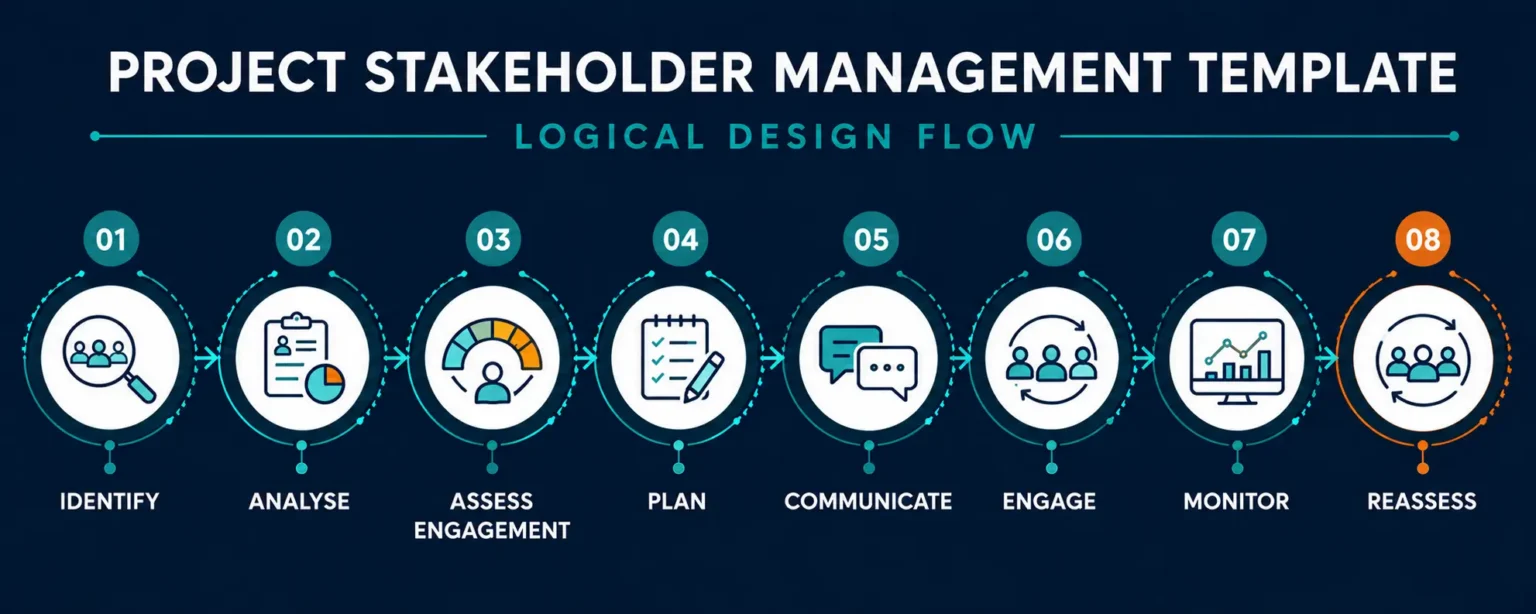
Projects involve stakeholders with different interests, influence, expectations, responsibilities, and levels of engagement. This Project Stakeholder Management Template provides a structured framework to identify stakeholders, analyse their characteristics, plan engagement and communication, track interactions and actions, monitor changes, and reassess stakeholder strategies throughout the project.
Excel Template · Project Management
ABOUT THE TEMPLATE
A Structured Framework for Managing Project Stakeholders
The Project Stakeholder Management Template is an Excel-based project management workbook designed to help project professionals identify stakeholders, analyse their characteristics and influence, plan engagement and communication, track important interactions and actions, and monitor changes in stakeholder relationships throughout the project lifecycle.
The template supports the stakeholder-management process from establishing project context and building the stakeholder register to analysing engagement requirements, identifying engagement gaps, developing strategies, planning communication, recording interactions and commitments, monitoring stakeholder changes, and reassessing relationships to determine whether engagement strategies require adjustment.
Identify Project Stakeholders
Create a structured stakeholder register and record relevant information such as stakeholder roles, categories, organisations, interests, and other details required for effective stakeholder management.
Analyse Stakeholder Relationships
Assess stakeholder influence, impact, interest, dependency, visibility, urgency, current engagement, and desired engagement to identify important relationships and engagement gaps.
Plan Engagement & Communication
Define appropriate engagement approaches, responsibilities, communication activities, expected outcomes, owners, frequencies, and other requirements for managing important stakeholder relationships.
Monitor & Reassess
Track stakeholder interactions, concerns, commitments, actions, changing conditions, and engagement effectiveness to determine whether stakeholder strategies should continue, change, or require further attention.
WHAT’S INCLUDED
Everything You Need for Structured Stakeholder Management
The workbook brings project context, stakeholder identification, analysis, engagement planning, communication, interaction tracking, monitoring, reporting, and reassessment into one connected framework. Each section supports a different stage of stakeholder management, from identifying important stakeholders through engagement and continuous review.
01
Project Profile
Capture project information, delivery context, review details, project objectives, stakeholder-management purpose, governance context, and key considerations needed for effective stakeholder management.
02
Stakeholder Register
Identify relevant stakeholders and record their names, roles, organisations, categories, stakeholder types, interests, information sources, references, and other core stakeholder information.
03
Stakeholder Analysis
Assess stakeholder influence, impact, interest, dependency, visibility, urgency, current engagement, desired engagement, and other characteristics needed to understand stakeholder relationships.
04
Engagement Strategy & RACI
Define stakeholder engagement objectives, approaches, methods, frequencies, expected outcomes, responsible owners, and RACI relationships to establish clear engagement responsibilities.
05
Communication Plan
Plan stakeholder communications by defining communication activities, methods, timing, frequency, audiences, owners, purposes, expected results, and related engagement requirements.
06
Interaction & Action Log
Record important stakeholder interactions, observations, concerns, outcomes, commitments, agreed actions, responsible owners, due dates, follow-up requirements, and supporting references.
07
Monitoring & Reassessment
Review stakeholder conditions over time, record changes, concerns, engagement effectiveness, trends, reassessment requirements, recommended strategy changes, ownership, and next review dates.
08
Summary Dashboard
Review stakeholder attention areas, engagement gaps, reassessment requirements, open and completed actions, strategy-change recommendations, and other key information through a consolidated management-level view.
09
Configuration
Maintain the controlled values, classifications, status options, engagement definitions, and supporting settings used throughout the workbook for consistent data entry and interpretation.
HOW TO USE THE TEMPLATE
From Stakeholder Identification to Continuous Engagement
The template follows a structured stakeholder-management workflow that helps you establish project context, identify stakeholders, analyse their characteristics, plan engagement and communication, record interactions and actions, monitor changes, and reassess stakeholder relationships throughout the project.
1. Establish the Project Context
Start with the Project Profile and record project details, delivery context, review period, objectives, stakeholder-management purpose, governance context, and key considerations needed to establish the project environment for stakeholder management.
2. Build the Stakeholder Register
Use the Stakeholder Register to identify relevant individuals, groups, organisations, and other parties who may affect or be affected by the project. Assign a unique Stakeholder ID and record core information for consistent stakeholder management.
3. Analyse Stakeholder Relationships
Use Stakeholder Analysis to assess influence, impact, interest, dependency, visibility, urgency, current engagement, and desired engagement. Compare positions to identify engagement gaps and areas requiring additional attention.
4. Develop Engagement Strategies
Use Engagement Strategy & RACI to define appropriate approaches for important stakeholders. Establish engagement objectives, methods, frequencies, expected outcomes, responsible owners, and RACI relationships for clear engagement responsibilities.
5. Plan Stakeholder Communication
Use the Communication Plan to define stakeholder communication activities, purposes, methods, timing, frequency, audiences, owners, expected results, and requirements needed to support consistent stakeholder engagement.
6. Record Interactions & Actions
Use the Interaction & Action Log to document stakeholder interactions, observations, concerns, outcomes, commitments, and agreed actions. Assign owners and target dates so important commitments remain visible and properly followed through.
7. Monitor & Reassess
Use Monitoring & Reassessment to review stakeholder conditions, changes, concerns, engagement effectiveness, trends, and reassessment requirements after significant project events or during regular reviews throughout the project lifecycle.
8. Review & Adjust the Strategy
Use the Summary Dashboard and supporting sheets to review stakeholder attention areas, engagement gaps, open actions, reassessment requirements, and strategy recommendations when stakeholder conditions or engagement needs change.
Manage Relationships, Not Just Records
Effective stakeholder management requires more than maintaining a stakeholder list. Use project information, interactions, engagement outcomes, and professional judgement to determine when stakeholder strategies should be maintained, strengthened, changed, or reviewed.
STAKEHOLDER ANALYSIS
Assess Eight Key Stakeholder Characteristics
Effective stakeholder management requires more than identifying who is involved in a project. The template provides a structured assessment across eight important characteristics, helping teams understand stakeholder importance, relationship dynamics, current engagement, and the level of engagement required.
Influence
Assess the stakeholder’s ability to affect project decisions, outcomes, priorities, resources, approvals, or other conditions that may significantly influence project delivery.
Impact
Assess how strongly the project may affect the stakeholder’s responsibilities, interests, operations, expectations, objectives, or other areas that may influence their level of involvement.
Interest
Review the stakeholder’s level of interest in the project, including their expectations, concerns, involvement, attention, and potential willingness to support or challenge project decisions.
Dependency
Assess the extent to which the project or stakeholder depends on the other for decisions, information, approvals, resources, deliverables, access, cooperation, or other important project outcomes.
Visibility
Consider how visible the stakeholder is within the project environment, including their organisational position, exposure, involvement, influence on others, and importance to project governance or communication.
Urgency
Assess how quickly stakeholder concerns, expectations, decisions, requests, or engagement requirements need to be addressed to avoid delays, conflicts, escalation, or other project impacts.
Current Engagement
Assess the stakeholder’s current level of engagement and involvement to understand their present position, relationship with the project, level of support, concerns, and participation in relevant project activities.
Desired Engagement
Define the level of engagement the project requires from the stakeholder and compare it with the current position to identify engagement gaps and determine whether the stakeholder strategy needs additional attention.
ENGAGEMENT ASSESSMENT
Use Stakeholder Evidence to Assess Engagement
The template uses structured engagement classifications to help project teams understand each stakeholder’s current relationship with the project and determine the level of engagement required. The assessment supports comparison between current and desired engagement to identify meaningful gaps.
Unaware
Limited Awareness
The stakeholder has limited awareness of the project, its objectives, decisions, or potential impact. Additional communication may be required to establish sufficient understanding and awareness.
Resistant
Requires Attention
The stakeholder is aware of the project but may oppose, question, or resist its direction, decisions, or outcomes. The engagement approach should address concerns and understand the reasons for resistance.
Neutral
Limited Support
The stakeholder understands the project but has not demonstrated clear support or resistance. Appropriate engagement should maintain awareness, address expectations, and encourage constructive involvement where required.
Supportive
Positive Engagement
The stakeholder understands the project and generally supports its objectives or direction. Engagement should maintain this support and ensure continued alignment with project needs.
Leading
Active Advocacy
The stakeholder actively supports the project and may help influence others, resolve concerns, enable decisions, or strengthen project outcomes. Engagement should maintain this level of involvement and support.
FROM ASSESSMENT TO ACTION
Turn Stakeholder Insights Into Meaningful Engagement
Stakeholder analysis becomes valuable when identified relationships and engagement gaps lead to a clear management response. The template connects stakeholder analysis with engagement strategy, communication, interaction tracking, actions, monitoring, and reassessment to support effective stakeholder management throughout the project.
Engagement Gap
Understand Where Stakeholder Engagement Needs Attention
The template compares each stakeholder’s current engagement position with the desired engagement level required by the project. This helps project teams identify relationships that may require additional attention, a different engagement approach, stronger communication, clearer responsibilities, or more focused stakeholder management to support project objectives. By identifying these gaps early, teams can prioritize important relationships and define practical engagement strategies that are aligned with stakeholder expectations and project needs.
Current Engagement
Shows the stakeholder’s present level of awareness, involvement, support, or participation in relation to the project and its activities.
Desired Engagement
Defines the level of stakeholder awareness, involvement, support, or participation the project requires to maintain effective engagement and support project objectives.
Engagement Gap
Highlights where the current and desired positions differ, helping the project team identify stakeholders who may require a specific engagement strategy or increased management attention.
From Engagement Gaps to Action
Convert Stakeholder Insights Into Engagement Actions
Identifying an engagement gap is only the starting point. The template provides a structured path for determining the appropriate engagement approach, assigning responsibilities, planning communication, recording stakeholder interactions, and monitoring whether the strategy remains effective.
Define the Strategy
Establish the engagement objective, approach, method, frequency, expected outcome, owner, and relevant RACI responsibilities for the stakeholder relationship.
Plan Communication
Translate the engagement strategy into specific communication activities with defined purpose, audience, method, timing, frequency, owner, and expected result.
Record & Track Actions
Document important stakeholder interactions, concerns, outcomes, commitments, and agreed actions, including responsible owners and target dates for follow-up.
Monitor & Reassess
Review stakeholder conditions, engagement effectiveness, trends, and changes over time to determine whether the existing strategy should continue, change, or require additional management attention.
DESIGNED FOR FLEXIBLE USE
Adapt the Stakeholder Management Framework to Your Project Environment
Projects differ in their delivery models, complexity, stakeholder groups, governance requirements, communication needs, and operating environments. The template provides a consistent stakeholder-management framework while allowing stakeholder categories, engagement approaches, communication practices, and review requirements to be adapted to each project.
Construction & Infrastructure
Adapt the framework to clients, contractors, consultants, authorities, communities, suppliers, site teams, safety requirements, approvals, interfaces, and other stakeholder relationships common to complex delivery environments.
Engineering, EPC & Manufacturing
Adjust the framework for owners, engineering teams, suppliers, contractors, production teams, technical authorities, quality functions, procurement groups, and other stakeholders influencing complex project delivery and operational outcomes.
IT & Digital Projects
Adapt the framework for business users, technology teams, vendors, sponsors, product owners, security teams, testing groups, and other stakeholders involved in technology delivery, implementation, adoption, and organisational change.
Professional & Corporate Projects
Apply the framework to clients, consultants, leadership teams, business functions, employees, partners, regulators, and other stakeholders involved in consulting engagements, transformations, internal initiatives, and corporate projects.
Learn the Approach and Apply It to Your Project
Understand how to identify and analyse stakeholders, assess engagement gaps, develop engagement strategies, plan communication, track interactions and actions, and monitor stakeholder relationships before applying the structured template to your own project.
Project Stakeholder Management Template FAQs
What is a Project Stakeholder Management Template?
It is a structured project management tool for identifying stakeholders, analysing their characteristics, planning engagement and communication, tracking interactions and actions, and monitoring stakeholder relationships.
Who can use the Project Stakeholder Management Template?
Project managers, PMO professionals, project controls teams, programme managers, consultants, project governance teams, and other professionals responsible for stakeholder engagement can use the template.
What does the template include?
The workbook includes a Project Profile, Stakeholder Register, Stakeholder Analysis, Engagement Strategy & RACI, Communication Plan, Interaction & Action Log, Monitoring & Reassessment, Summary Dashboard, and Configuration sheets.
Does the template include RACI?
Yes. The Engagement Strategy & RACI sheet helps define stakeholder engagement responsibilities using Responsible, Accountable, Consulted, and Informed relationships.
Is this template a replacement for a stakeholder register?
No. The Stakeholder Register is only one component of the workbook. The template extends beyond identification to include analysis, engagement strategy, RACI, communication, interaction tracking, monitoring, and reassessment.
Can I customize the template for my project?
Yes. The template can be adapted to suit your project’s stakeholder categories, engagement approaches, communication requirements, governance arrangements, review frequency, and organisational processes.
Can the template be used across different industries?
Yes. It can be adapted for construction, infrastructure, engineering, EPC, manufacturing, IT, digital transformation, consulting, professional services, corporate projects, and other project environments.
Learn & Apply
Understand the Approach. Apply It to Your Project.
Understand stakeholder management through the related guide, then use the structured template to identify stakeholders, analyse engagement, plan communication, track interactions, and monitor relationships.
Learn with the Guide
How to Manage Difficult Project Stakeholders
Learn how to identify stakeholders, analyse their influence and interests, plan engagement, manage communication, and maintain effective stakeholder relationships throughout the project.
Apply with the Template
Download Project Stakeholder Management Template
Use the Excel-based framework to identify stakeholders, analyse engagement, develop strategies, plan communication, track actions, and monitor stakeholder relationships over time.
FEATURED PROJECT MANAGEMENT TEMPLATES
Templates for Common Project Challenges
Our featured templates provide practical starting points for some of the common situations project teams encounter during project delivery. Each resource is designed to help you structure information, assess a situation, plan appropriate actions, or support better project decisions.
Project Objectives & Success Criteria Template
Define clear project objectives and success criteria, helping teams establish shared expectations about what the project should achieve and how success will be measured.
Project Recovery Plan Template
Structure recovery actions when a project is falling behind, including key issues, corrective measures, responsibilities, priorities, and target completion dates.
Project Decision-Making Template
Structure important project decisions by organizing the situation, available options, impacts, recommendations, decision ownership, and required follow-up actions.
MORE PROJECT MANAGEMENT RESOURCESE TYPES
Continue Your Project Management Learning
Project management knowledge becomes more valuable when you can apply it, see it in practice, and continue developing your capabilities. Explore our other resources to complement the practical guidance provided in these guides.
Project Management Guides
Explore focused guidance on common project challenges, decisions, stakeholder situations, performance concerns, and approaches to real project delivery.
Downloads
Access useful project management materials and reference resources to support your learning and day-to-day project work.
Career Roadmaps
Follow structured learning paths to develop project management knowledge, practical skills, and capabilities for your professional growth.
Case Studies
Explore realistic project situations, decisions, challenges, and outcomes to understand how project management practices work in practice.
Glossary
Find clear explanations of project management terminology, concepts, abbreviations, and commonly used professional language.
Insights & Articles
Explore professional perspectives, practical insights, emerging practices, and deeper discussions relevant to project management.
Looking for more project management resources? Explore the Kleios Technologies Resources Hub to discover our complete collection of guides, templates, downloads, career roadmaps, case studies, glossary resources, and insights.
RELATED KNOWLEDGE DOMAINS
Continue Your Learning Across Related Knowledge Domains
Project management connects with specialized disciplines, tools, and professional practices that support successful project delivery. Explore related knowledge domains to expand your expertise, develop complementary skills, and discover deeper resources beyond the Project Management Guides.
Expand your expertise one domain at a time and build a well-rounded project management skill set.
Why Explore Related Domains?
- Develop cross-functional project management expertise
- Discover specialized knowledge beyond core project management
- Access practical resources across interconnected disciplines
- Build a well-rounded professional learning pathway
- Strengthen your ability to address real-world project challenges
Each knowledge domain complements the practical guidance in our Project Management Guides, helping you build broader capabilities and address real-world project challenges with greater confidence.
Project Planning & Scheduling
Planning techniques, scheduling methods, and timeline management resources.
Project Controls
Performance measurement, forecasting, and project control best practices.
PMO
Governance, portfolio management, and organizational project excellence.
Risk Management
Risk identification, assessment, mitigation, and monitoring resources.
Primavera P6
Professional planning, scheduling, resource management, and reporting.
Microsoft Project
Project scheduling, tracking, reporting, and collaboration resources.
Power BI
Interactive dashboards, reporting, visualization, and project analytics.
PMI Certifications
Certification guidance, exam preparation, and professional development resources.